This article will talk about positive and negative usability issues that are visible in three ubiquitous computing devices that fall into the inch, foot and yard scale as described by Mark Weiser, who is also called the father of ubiquitous computing.
Inch-scale Device
PDAs, Voice Recorders, smart phones, smart watches fall under inch scale device category. Smart ear buds and smart hearing aids (also called hearables) are a form of inch scale computing devices which we will focus on. There are many in the market now such as Halo Sport, a neuropriming headset for athletes and Oticon Opn the first internet connected smart hearing aid. There is also a device from called Pilot which translates real-time between users speaking different languages. The Sony Xperia Ear duo acts as an in-ear personal assistant which can deliver news and schedule updates based on location, stream music wirelessly, works with Google assistant and Siri and also responds to gestures. (Click here for more hearable devices.)

- Positive
These devices are placed closed to the ear which provides a closer gateway into brain and body activity thereby enabling this device to track heart rate, blood pressure, temperature, pulse, etc. more effectively than a device worn on the wrist. They are also more accurate than wrist worn devices. The small and lightweight design is also a good idea as it is easier for use.
- Negative
It’s difficult to have a long battery life on such a tiny device. The average wireless smart earbud/ hearing aid has between 4-5 hours of power which is an inconvenience to users
Foot-scale Device
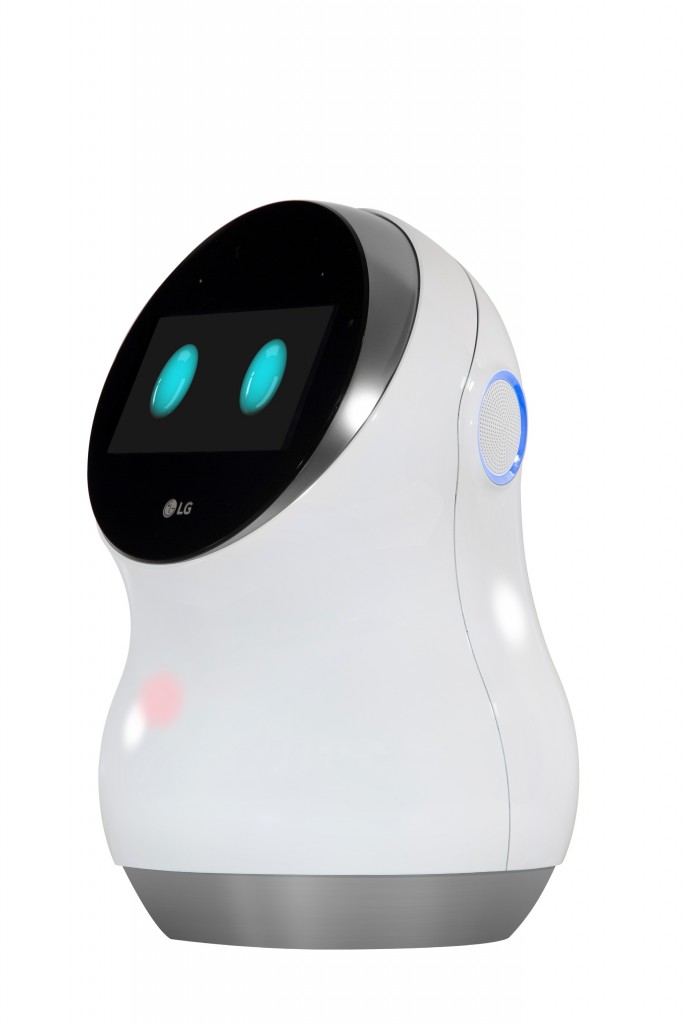
LG Hub Bot is a robot to support smart home running, which looks friendly with a pair of cute eyes. It can be connected to various smart household appliances, monitor them and controls them as human orders. The robot is designed with a screen to provide more visual information to users and also support video calls. This device is considered as a foot-scale device because is middle-sized, and normally not to be carried around. See more on https://www.youtube.com/watch?v=6UgM9-JCfUw
- Positive usability issues:
Conversational interaction – LG Hub Bot utilize AI to support conversational interaction, which is very easy and convenient for both kids and adults to access. The interaction is so natural just like daily talk with a friend that it “disappears” as weaves itself into the fabric of everyday life and becomes indistinguishable. (2002, Weiser)
Connected with other IoT appliances in home – LG Hub Bot can receive real-time data gathering from sensors of not only itself but also other smart appliances in a house. For example, it can detect the types, qualities and quantities of the ingredients stored in the smart refrigerator. (The pictures below show how the robot can help a mother to organize dinner)
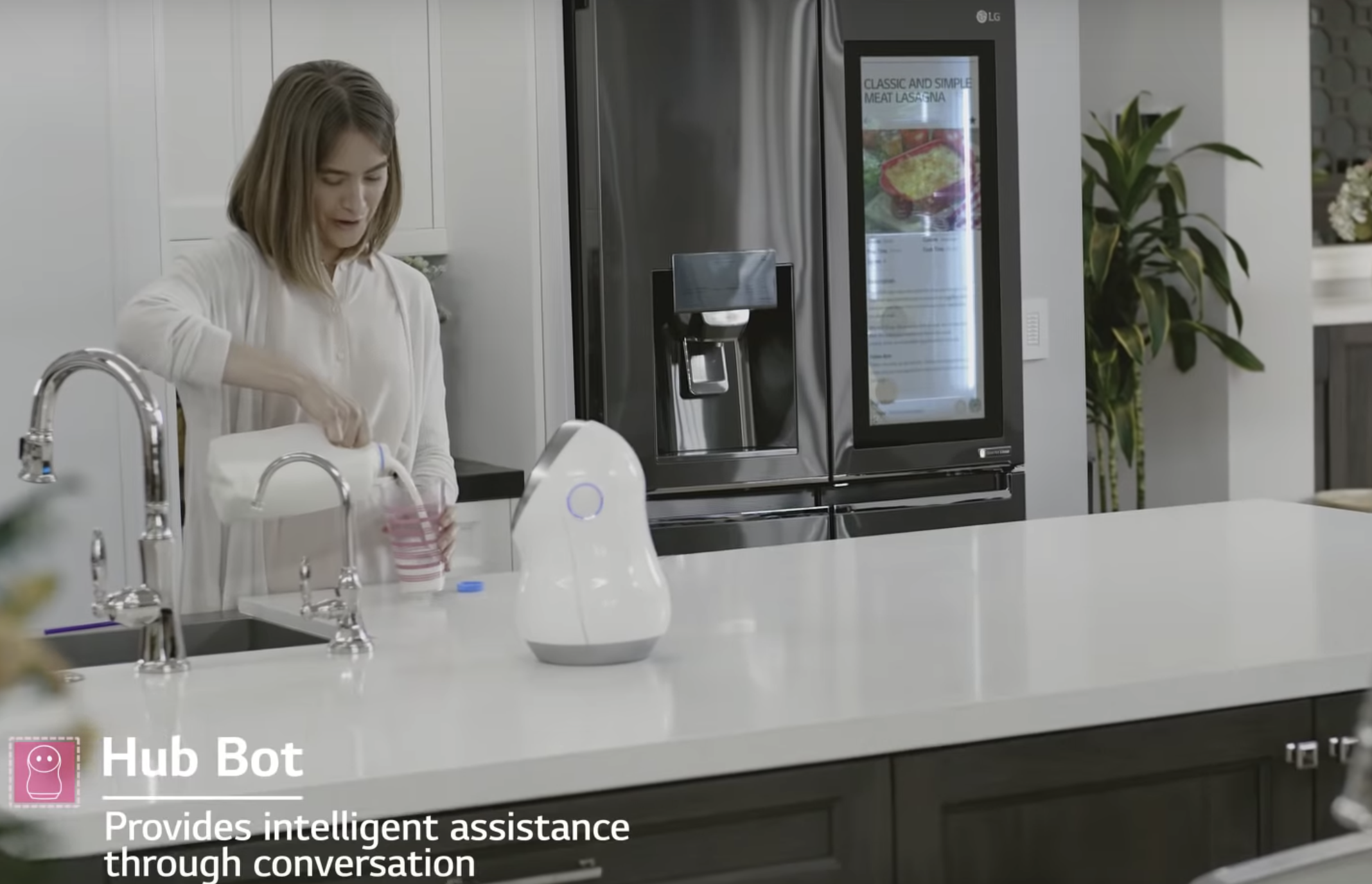
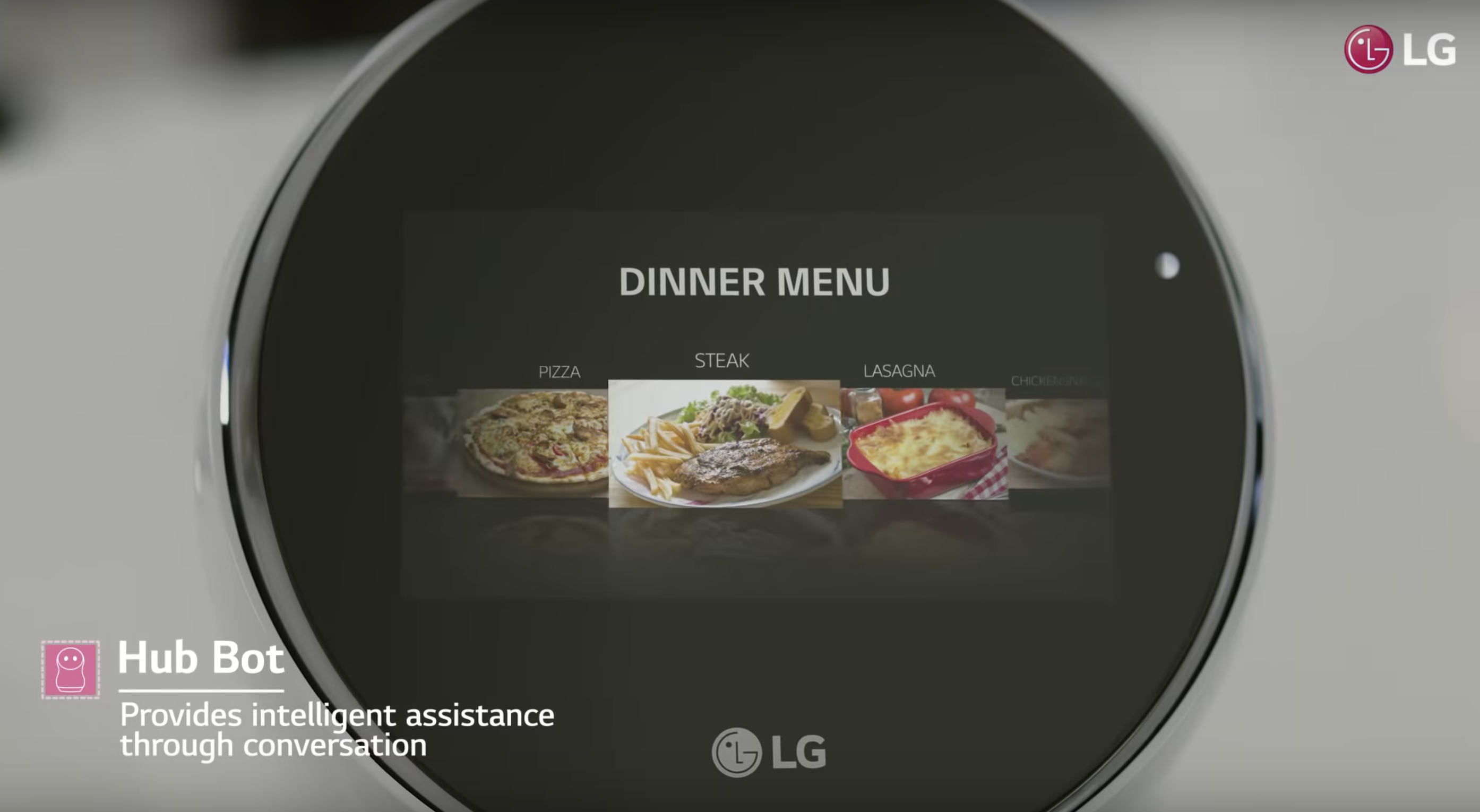
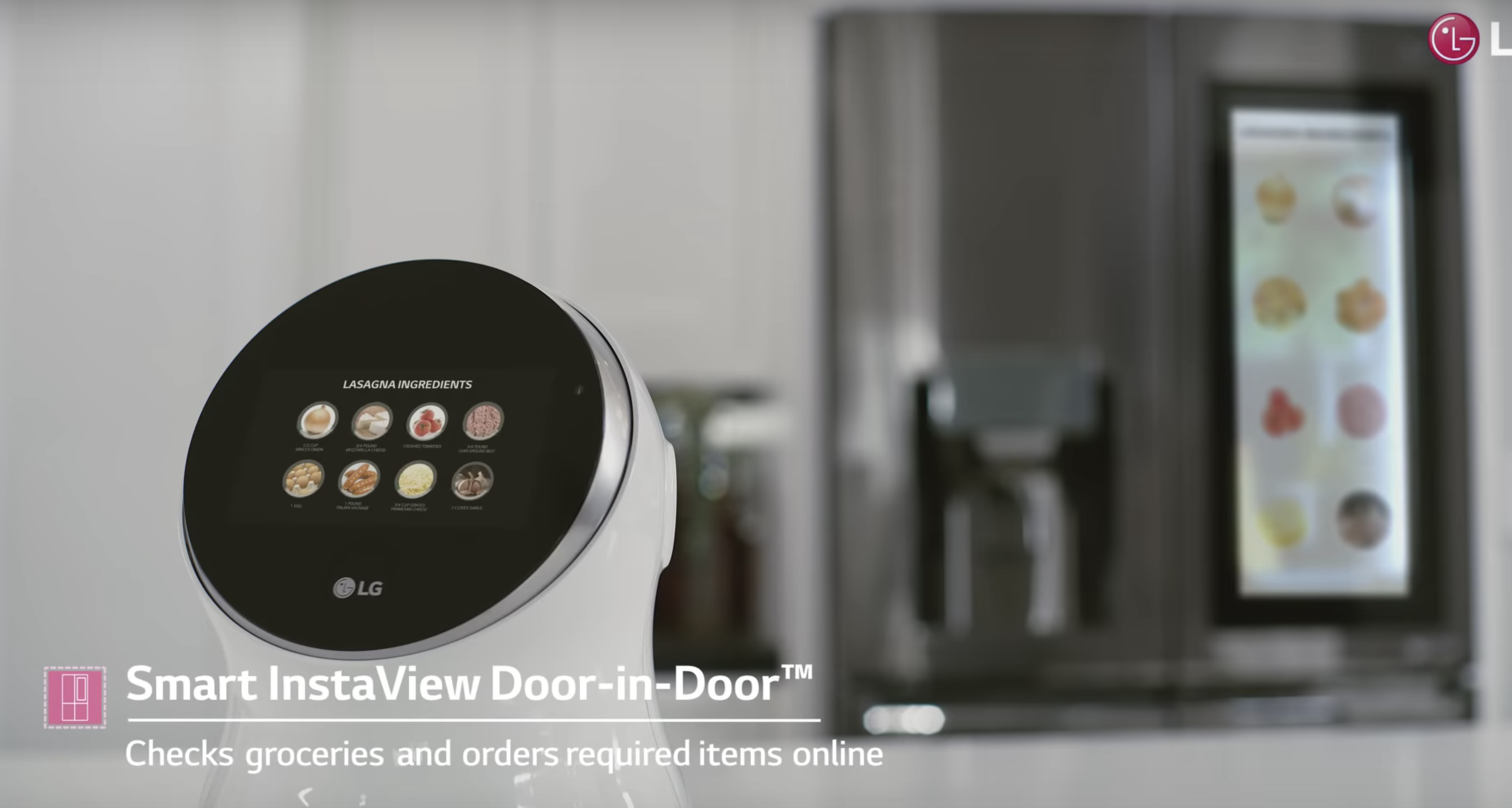
Processing multiple context input – the device can receive contextual input from its own sensors and other appliances’ sensors. It processes the inputs and provides customized service to the house owners. For example, It supports voice recognition so it can differentiate you, your partner and your kids. (Used the framework mentioned in the conference paper: https://ieeexplore.ieee.org/document/5361637)
- Negative usability issues:
Safety – lots of personal data and house status information is stored in the wireless device. If got hacked, it will be a threat to the family.
Not perfect voice information process technology – when the families say some words what can not be understood by the robot due to accent or uncommon words, the user will be annoyed and frustrated.
Yard-scale Device
Yard scale devices comprises of electronic whiteboards, plasma displays and smart bulletin boards. We will focus on smart electronic billboards which are designed to pick cues from people to enable them to customise responses to them. They are used to target advertisements in a changing environment by sending and receiving data over the internet.
A Swedish pharmacy designed a responsive billboard to discourage smoking which worked with the help of a smoke detector.
Here’s another one made for General Motors, which uses a camera and facial recognition technology to respond to people.
- Positive
Context based – These electronic billboards can make context based advertisements to users. The products or services offered will be targeted as specific groups so that people are not shown anything that they won’t like, not applicable or not useful to them.
- Negative
Safety – the device works based on the personal data gathered through a camera from the users. Even though it’s anonymous, it may raise potential privacy concern in the future.
Human’s engagements can be unlimited, which is hard for the avatar to cover all of them. Therefore, when it encounters some actions unrecognizable, users may feel bored and frustrated.
Reference
Picture 2-4: https://www.youtube.com/watch?v=6UgM9-JCfUw
Weiser Mark. (1991). The Computer for the 21 st Century. Scientific American, 265(3), 94. Retrieved from http://search.ebscohost.com/login.aspx?direct=true&db=edsjsr&AN=edsjsr.24938718&site=eds-live&scope=site
T. Mantoro, C. W. Johnson and M. A. Ayu, “A Framework in Ubiquitous Computing Environment for Providing Intelligent Responses,” 2009 Third International Conference on Mobile Ubiquitous Computing, Systems, Services and Technologies, Sliema, 2009, pp. 289-294. doi: 10.1109/UBICOMM.2009.59
 Usability and User Experience: What's new?